MBBS in China for Indian Students
MBBS in China for Indian Students
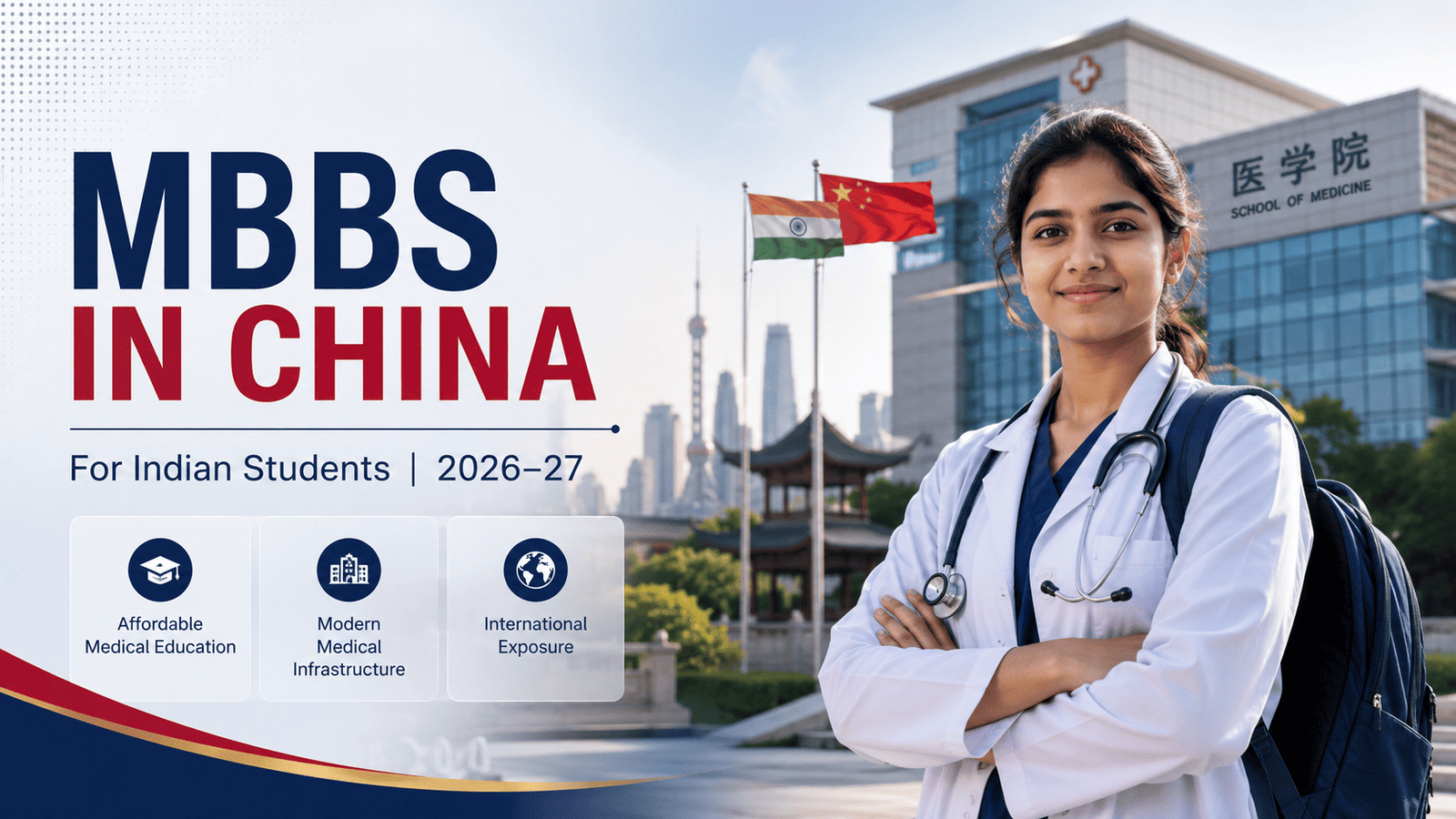
MBBS in China is an option for Indian students looking to pursue medical education abroad at established universities with modern teaching facilities and clinical training infrastructure. Selected Chinese universities offer English-taught Clinical Medicine programs for international students, providing exposure to a different healthcare and academic environment. The medical program generally follows a six-year structure, although the exact curriculum and internship arrangement vary by university. Indian students must meet the applicable academic requirements and NEET requirements, along with the current regulations governing foreign medical graduates in India. Before applying, students should carefully verify the university's current international admission status, English-taught program authorization, clinical training, internship structure, total fees and compliance with applicable NMC/FMGL requirements. China can be considered by students seeking international exposure, established medical institutions and comparatively affordable options at selected universities.
MBBS in China for Indian Students 2026–27
China has become an important destination for international medical education because of its large university system, modern teaching hospitals, comparatively affordable education at many institutions, and availability of English-taught Clinical Medicine programs for international students.
For Indian students, however, choosing a medical university in China requires more than comparing tuition fees. The university and program must be checked carefully against the current National Medical Commission (NMC) requirements applicable to foreign medical graduates, as well as the Chinese Ministry of Education's requirements for English-taught undergraduate Clinical Medicine programs.
Chinese medical universities offer international students opportunities to study medicine in a multicultural environment, gain clinical exposure and experience a different healthcare system. Some universities are research-intensive institutions with large affiliated hospitals, while others may be more focused on undergraduate medical education.
For the 2026–27 admission cycle, Indian students should verify the university's current international admission notice, English-taught Clinical Medicine status, course structure, internship arrangements, teaching language, clinical training requirements and compliance with applicable Indian regulations before paying any admission or tuition fee.

MBBS in China Highlights 2026–27
| Particular | Details |
|---|---|
| Country | China |
| Course | Undergraduate Clinical Medicine / MBBS-equivalent medical program |
| Duration | Usually around 6 years, depending on the university and curriculum |
| Clinical Training | Included as part of the medical curriculum; exact structure varies by university |
| Medium | English-taught programs are available at selected universities |
| Eligibility for Indian Students | 10+2 with Physics, Chemistry and Biology/Biotechnology and other applicable requirements |
| NEET | Mandatory for Indian students seeking to pursue a foreign medical qualification, subject to current NMC rules |
| Admission | University-specific application process |
| University Selection | Verify current Chinese Ministry of Education status and NMC/FMGL compliance |
| Teaching Hospitals | University-affiliated hospitals and clinical training facilities vary by institution |
| Academic Session | University-specific; check the 2026–27 admission notice |
| Internship | Course-specific and must be checked carefully for compliance with Indian regulations |
| Scholarship | Available at some Chinese universities, subject to eligibility and university/government schemes |
| Language | Academic instruction may be in English in approved English-taught programs; Chinese language learning may still be required for clinical communication |
The Chinese Ministry of Education has historically maintained a controlled list of universities permitted to enroll international students in English-taught undergraduate Clinical Medicine programs. Its 2023–24 notice listed 44 institutions with a total planned enrollment of 3,048 students and stated that universities outside the list could not recruit international students into English-taught undergraduate Clinical Medicine programs or issue English-language MBBS degrees.
Therefore, students should not rely only on a general statement such as "China has many NMC-approved medical colleges." The status of the specific university and specific program should be checked before admission.

Why Study MBBS in China?
China offers a combination of established universities, large teaching hospitals, research infrastructure and relatively affordable options compared with several Western destinations. These factors have made Chinese medical universities attractive to international students.
However, affordability should not be the only criterion when selecting a university.
1. Established Medical Universities
China has several long-established universities with medical schools, teaching hospitals and postgraduate research programs. Universities such as Fudan University, Zhejiang University, Wuhan University, Xi'an Jiaotong University and other institutions have substantial academic and clinical infrastructure.
The Chinese Ministry of Education has published lists of institutions authorized to provide English-taught undergraduate Clinical Medicine programs to international students.
2. English-Taught Medical Programs
Selected Chinese universities offer undergraduate Clinical Medicine programs in English for international students.
Importantly, English-taught MBBS is not automatically available at every medical university in China. The Chinese Ministry of Education regulates these programs and publishes university-specific lists and enrollment plans.
3. Modern Medical Infrastructure
Many major Chinese universities are connected with large teaching hospitals. Students can receive practical exposure through hospital-based training, although the quality, patient exposure, clinical responsibilities and internship arrangements vary by university.
Students should therefore ask the university for details about:
Affiliated teaching hospitals
Number of clinical training beds
Clinical rotation structure
Internship location
Patient exposure
Language used during clinical training
Supervision of international students
4. Research Exposure
Several Chinese universities have strong research programs in medicine, biotechnology, public health and biomedical sciences. Students studying at research-oriented universities may have opportunities to participate in academic projects, conferences, laboratory activities and research-related initiatives.
5. International Student Environment
Chinese universities host students from different countries. International student campuses can provide exposure to different cultures and educational backgrounds.
This can help students develop communication skills and adapt to a multicultural professional environment.
6. Scholarship Opportunities
Some Chinese universities and government-supported programs offer scholarships to eligible international students.
Scholarship availability, eligibility, amount and renewal conditions differ by university and academic year. Students should always check the official scholarship notice instead of assuming that every student will receive financial support.
MBBS in China Eligibility for Indian Students
Indian students planning to study medicine in China must satisfy both the admission requirements of the selected university and the requirements applicable to Indian students seeking a foreign medical qualification.
The basic academic requirements generally include:
Completion of Class 12 or equivalent qualification.
Physics, Chemistry and Biology/Biotechnology as required subjects.
Meeting the minimum marks prescribed by the applicable Indian regulations and the university.
Qualification in NEET for Indian students, as applicable.
Meeting the minimum age requirement under the applicable rules.
Possessing a valid passport.
Meeting the university's international student admission requirements.
NEET Requirement
NEET is an important requirement for Indian students who intend to pursue medicine abroad.
Students should not assume that passing NEET automatically guarantees admission to a Chinese medical university. NEET eligibility and university admission are separate matters.
A student must also satisfy the university's academic, documentation and other admission requirements.
Important NMC/FMGL Requirements
One of the most important parts of choosing MBBS in China is understanding the Indian regulatory requirements.
The NMC currently lists the Foreign Medical Graduate Licentiate Regulations, 2021, along with related FAQs and updates on its official regulations page.
Therefore, before selecting a Chinese medical university, Indian students should verify whether the complete program is compatible with the applicable FMGL requirements.
Students should pay particular attention to:
Duration of the medical course
Medium of instruction
Clinical training
Internship
Practical training
Clinical rotations
Examination structure
Eligibility for medical registration in the country of study
Requirements for registration in India after graduation
A university being well known internationally does not by itself guarantee eligibility for medical registration in India.
MBBS in China Admission Process 2026–27
The admission process varies between universities, but international students generally follow the following sequence.
Step 1: Check Eligibility
Review your academic qualification, NEET status, age and other admission requirements.
Step 2: Shortlist Universities
Compare universities based on:
Current English-taught Clinical Medicine status
NMC/FMGL compatibility
Tuition fees
Hostel charges
Location
Teaching hospitals
Clinical training
University reputation
International student support
Internship arrangements
Step 3: Verify the University
This is one of the most important steps.
Do not select a university solely because an agent or website calls it "NMC approved."
Check the latest official information from:
The Chinese Ministry of Education
The university's official website
NMC regulations applicable to foreign medical graduates
Step 4: Prepare Documents
Common documents may include:
Class 10 certificate
Class 12 certificate and mark sheet
NEET scorecard
Passport
Passport-size photographs
Medical examination documents
Birth certificate, where required
Police clearance or other documents, where required
Financial documents, if required
University-specific application forms
The exact document list varies by university.
Step 5: Submit University Application
Submit the application through the university's official international student admission system or through the method specified in the official admission notice.
Step 6: Receive Admission Documents
If selected, the university generally issues the required admission documentation for the student.
Step 7: Apply for Student Visa
After receiving the required university documents, students can proceed with the applicable Chinese student visa process.
Step 8: Travel and Complete University Registration
After obtaining the visa, students travel to China and complete university registration, medical checks and other formalities as required.
Documents Required for MBBS in China
The exact requirements vary between universities, but students are commonly asked for:
| Document | Purpose |
|---|---|
| Class 10 Mark Sheet | Academic verification |
| Class 12 Mark Sheet | Academic eligibility |
| NEET Scorecard | Indian medical eligibility |
| Passport | Identity and travel |
| Passport-size Photographs | Application and university records |
| Medical Examination | Health clearance |
| Birth Certificate | Age/identity verification where required |
| Financial Documents | Where required by university/visa process |
| Other University Forms | Institution-specific requirements |
Students should always follow the latest document checklist issued by their selected university.
MBBS in China Duration
The medical program commonly follows a six-year structure, although the exact academic and clinical structure varies by university.
A typical structure may include:
Pre-clinical/basic medical sciences
Para-clinical subjects
Clinical medical subjects
Clinical rotations
Internship or practical clinical training
The exact duration and internship arrangement must be verified from the university's official curriculum.
Indian students should pay particular attention to whether the complete course and clinical training satisfy the applicable Indian FMGL requirements.
MBBS in China Syllabus
The curriculum generally progresses from basic medical sciences to clinical medicine.
Pre-Clinical Stage
Students may study subjects such as:
Anatomy
Histology and Embryology
Physiology
Biochemistry
Medical Chemistry
Cell Biology
Medical Terminology
Para-Clinical Stage
Common subjects include:
Pathology
Pharmacology
Microbiology
Immunology
Parasitology
Pathophysiology
Preventive Medicine
Epidemiology
Forensic Medicine
Clinical Stage
Clinical education may include:
Internal Medicine
General Surgery
Pediatrics
Obstetrics and Gynecology
Ophthalmology
Otorhinolaryngology
Dermatology
Neurology
Psychiatry
Radiology
Emergency Medicine
Infectious Diseases
The actual syllabus differs from university to university.
MBBS in China Fee Structure 2026–27
The cost of studying medicine in China varies considerably between universities.
There is no single tuition fee for MBBS in China.
Fees can differ according to:
University
City
Program
Tuition structure
Hostel
Insurance
Registration charges
Laboratory charges
Other university fees
Therefore, the old table showing a fixed "₹20–30 lakh total course fee" should not be used as a universal figure.
A better approach for a 2026–27 website page is to publish university-specific fees only after checking the current official admission notice.
Major Expenses
| Expense | What to Check |
|---|---|
| Tuition Fee | Annual university tuition |
| Hostel | Room type and annual accommodation cost |
| Registration | University registration charges |
| Medical Insurance | International student insurance |
| Visa | Applicable visa charges |
| Food | Personal monthly expenditure |
| Books & Supplies | Academic requirements |
| Travel | Flights and local transportation |
| Personal Expenses | Lifestyle and miscellaneous costs |
Important Fee Disclaimer
Fees can change every academic year. Students should confirm the current 2026–27 fee schedule directly with the university before making any payment.
Cost of Living in China for Indian Students
The cost of living depends heavily on the city.
Living expenses in a major metropolitan city such as Shanghai or Beijing may be higher than in smaller cities.
Students should budget for:
Food
Transportation
Mobile and internet
Personal expenses
Study materials
Clothing
Local travel
Medical/insurance-related expenses where applicable
Students living in university accommodation can generally manage expenses more easily than students renting private accommodation, although the actual cost depends on the university and city.
Hostel and Accommodation for Indian Students
Chinese universities generally provide accommodation options for international students, but facilities vary.
A university hostel may include:
Furnished rooms
Bed and study table
Wardrobe
Internet access
Shared or attached bathroom
Laundry facilities
Common areas
Security arrangements
Some universities have separate accommodation arrangements for male and female students.
Students should verify:
Room occupancy
Hostel fee
Electricity charges
Heating/air-conditioning charges
Internet charges
Kitchen availability
Curfew rules
Guest policy
Distance from teaching hospital
Food for Indian Students in China
Food is an important consideration for Indian students.
Major university cities generally offer a wide range of food options, and some universities may have Indian restaurants or food options suitable for international students.
However, Indian food should not be presented as guaranteed at every university.
Students should check the specific university's hostel and campus dining facilities before admission.
Language of Study and Chinese Language
English-taught Clinical Medicine programs are available at selected Chinese universities.
The Chinese Ministry of Education regulates English-taught undergraduate Clinical Medicine programs and requires universities to meet specified quality requirements. Its regulations state that English-taught undergraduate medical education should provide solid medical knowledge, standardized clinical skills and appropriate professional attitudes.
However, students should understand an important practical point:
Studying academic subjects in English does not mean that Chinese language will be completely unnecessary.
During clinical exposure, students may encounter Chinese-speaking patients and healthcare workers. Learning basic Mandarin can therefore be highly useful for communication and everyday life.
Top Medical Universities in China for International Students
China has several universities with established medical schools. However, "top" should not be determined only by ranking or popularity.


For Indian students, a better selection framework is:
Current English-taught Clinical Medicine authorization
Compliance with applicable Indian regulations
University accreditation/status
Clinical training infrastructure
Teaching hospitals
Curriculum
International student support
Tuition and living costs
Location
Internship structure
Some well-known universities that have appeared on Chinese Ministry of Education lists for English-taught undergraduate Clinical Medicine include:
Jilin University
China Medical University
Dalian Medical University
Capital Medical University
Tianjin Medical University
Shandong University
Fudan University
Xinjiang Medical University
Nanjing Medical University
Jiangsu University
Wenzhou Medical University
Zhejiang University
Wuhan University
Huazhong University of Science and Technology
Xi'an Jiaotong University
Southern Medical University
Jinan University
Guangxi Medical University
Sichuan University
Chongqing Medical University
Harbin Medical University
Beihua University
Qingdao University
Hebei Medical University
Ningxia Medical University
Tongji University
Southeast University
Yangzhou University
Nantong University
Soochow University
Ningbo University
Fujian Medical University
Anhui Medical University
Xuzhou Medical University
China Three Gorges University
Zhengzhou University
Guangzhou Medical University
Sun Yat-sen University
Shantou University
Kunming Medical University
North Sichuan Medical University
Southwest Medical University
Xiamen University
The Chinese Ministry of Education's 2017–18 list, for example, contained many of these institutions, but that historical list should not be treated as proof of 2026–27 admission availability.
For the 2026–27 page, each university should be rechecked against the latest available official admission information.
Popular Chinese Medical Universities
Fudan University
Fudan University is a major comprehensive research university in Shanghai with an established medical education system.
Its medical education benefits from a large academic and clinical ecosystem in Shanghai.
For Indian students, the important consideration is not simply the university's reputation but whether the specific medical program being offered to international students satisfies the requirements applicable to their intended future practice.
Capital Medical University
Capital Medical University is located in Beijing and has a strong medical and clinical education ecosystem.
The university has been included in Chinese Ministry of Education lists of institutions authorized to enroll international students in English-taught undergraduate Clinical Medicine programs.
China Medical University
China Medical University is located in Shenyang and is one of China's established medical universities.
It has historically been included among institutions authorized for English-taught undergraduate Clinical Medicine programs for international students.
Dalian Medical University
Dalian Medical University is located in Dalian, Liaoning Province.
The university has a long history of medical education and has also appeared in Chinese Ministry of Education lists for English-taught Clinical Medicine programs.
Wuhan University
Wuhan University is a major comprehensive university with medical education and affiliated clinical facilities.
It has appeared on China's official list of institutions authorized for English-taught undergraduate Clinical Medicine programs for international students.
Zhejiang University
Zhejiang University is a major research university located in Hangzhou.
Its medical education system is associated with substantial research and clinical infrastructure, making it one of the well-known Chinese universities considered by international students.
Advantages of Studying MBBS in China
Affordable Options
Compared with several Western medical education destinations, some Chinese universities offer comparatively affordable tuition and living arrangements.
Established Universities
China has numerous established universities with medical faculties and teaching hospitals.
Research Opportunities
Research-oriented universities can provide exposure to biomedical research, laboratory science and clinical research.
English-Taught Programs
Selected universities offer English-taught undergraduate Clinical Medicine programs for international students.
Large Teaching Hospitals
Students at major universities may receive clinical exposure through affiliated hospitals.
Multicultural Environment
International students can interact with students from different countries and backgrounds.
Scholarship Opportunities
Eligible students may apply for university or government-supported scholarships where available.

Challenges of Studying MBBS in China
A reliable MBBS Abroad guide should also discuss the disadvantages.
Chinese Language
Even when academic instruction is in English, basic Chinese can be useful during clinical interactions and everyday life.
Weather
China has a wide range of climates. Students should choose their city according to their ability to adapt to local weather conditions.
Distance from India
Students may need to travel significant distances to return home during holidays.
Regulatory Compliance
Indian students must carefully verify the foreign medical graduate requirements before selecting a university.
Clinical Exposure
Clinical exposure can vary significantly between universities and hospitals.
Program Availability
Not every Chinese university offers an English-taught medical program to international students.
Fee Differences
The total cost can vary substantially from one university and city to another.
MBBS in China vs MBBS in India
| Factor | China | India |
|---|---|---|
| Admission | University/foreign admission route subject to applicable requirements | NEET-based admission |
| Competition | University and international admission requirements | Extremely competitive |
| Tuition | Varies by university | Government colleges are generally lower-cost; private colleges can be substantially higher |
| Language | English-taught options available at selected universities; local language useful clinically | Primarily English/regional language depending on institution |
| Clinical Environment | Chinese healthcare system | Indian healthcare system |
| International Exposure | High | Primarily domestic |
| Regulatory Consideration | Foreign medical graduate requirements apply for Indian students | Indian medical education regulations apply directly |
| Distance | Overseas | Within India |
MBBS in China vs Other Popular MBBS Abroad Destinations
Indian students commonly compare China with Russia, Kazakhstan, Uzbekistan, Georgia, Bangladesh, Kyrgyzstan and other destinations.
Instead of asking which country is universally "best," students should compare:
Total cost
University quality
Clinical exposure
Teaching language
Climate
Food
Travel distance
Safety
Internship
Recognition and regulatory requirements
Future licensing pathway
The right choice depends on the student's academic profile, budget and long-term career plan.


Career Scope After MBBS in China
Completing a medical degree in China does not automatically make a graduate eligible to practice medicine in every country.
Graduates may pursue different pathways depending on the regulations of the country where they want to practice.
Returning to India
Indian graduates of foreign medical institutions must satisfy the applicable NMC requirements and licensing/registration pathway before practicing medicine in India.
Higher Education
Graduates may pursue postgraduate medical education or other healthcare-related programs, subject to the admission and licensing requirements of the destination country.
Medical Research
Students interested in research can explore opportunities in:
Clinical research
Public health
Biomedical sciences
Biotechnology
Epidemiology
Medical research
International Medical Careers
Students who intend to practice outside India should check the licensing requirements of that specific country before choosing a university.
FMGE/NExT and MBBS in China
This is one of the most important sections for Indian students.
Students should not choose a Chinese medical university based on claims such as "high FMGE passing rate" or "guaranteed licensing."
The regulatory framework for foreign medical graduates is evolving, and the NMC currently publishes the Foreign Medical Graduate Licentiate Regulations and related FAQs.
Therefore, students should check the latest NMC requirements applicable at the time of their graduation and registration.
The university selection should be based on regulatory compliance, curriculum, clinical training and academic quality—not on promotional claims about licensing-exam success.
Is MBBS in China Valid in India?
A Chinese medical degree should not be described simply as "automatically valid in India."
For an Indian student, the important question is whether the medical qualification and the student's course satisfy the applicable NMC requirements for foreign medical graduates.
The NMC currently maintains Foreign Medical Graduate Licentiate Regulations and related guidance.
Students should therefore verify the complete course, clinical training and internship structure before admission.
Is NEET Required for MBBS in China?
For Indian students seeking to pursue medicine abroad, NEET qualification is an important requirement.
However, NEET qualification alone does not guarantee admission.
The student must also satisfy:
Academic requirements
University admission requirements
Documentation requirements
Applicable foreign medical graduate regulations
Is IELTS Required for MBBS in China?
IELTS is not universally required for every English-taught medical program in China.
The requirement depends on the university and its admission policy.
Students should check whether the university accepts previous English-medium education as evidence of English proficiency or requires a separate English-language test.
Therefore, it is better to write:
"IELTS may not be required by every university; requirements vary by institution."
This is safer than making a blanket statement that IELTS is never required.
Is MBBS in China Affordable?
China offers a range of medical universities with different tuition structures.
Some universities can be comparatively affordable, while prestigious universities in major cities may cost considerably more.
The final cost should include:
Tuition
Hostel
Food
Insurance
Visa
Travel
Books
Personal expenses
Other university charges
Students should compare the complete cost of the six-year program, rather than comparing tuition alone.
Is China Safe for Indian Medical Students?
Chinese universities generally provide dedicated international student facilities and campus security arrangements.
However, safety should be evaluated at the university and city level.
Students should check:
Campus security
Hostel security
Emergency services
International student office
Hospital facilities
Transportation
Local regulations
University support for international students
Who Should Consider MBBS in China?
MBBS in China may be considered by students who:
Want to pursue medicine abroad.
Are comfortable living in another country.
Prefer universities with established medical infrastructure.
Want exposure to a different healthcare system.
Are prepared to learn basic Chinese for daily and clinical communication.
Understand the licensing requirements for practicing in India or another country.
Are willing to carefully verify university and program eligibility.
Who Should Not Choose a Chinese Medical University Without Further Research?
Students should be cautious if they are:
Choosing only because of a low advertised fee.
Assuming every Chinese medical university offers English MBBS.
Believing that "WHO listed" automatically means medical registration in India.
Assuming NEET qualification guarantees admission.
Selecting a university without checking clinical training.
Depending entirely on an agent's verbal promises.
Ignoring NMC/FMGL requirements.
Choosing a university without checking its current international admission notice.
Common Mistakes Indian Students Make
Mistake 1: Choosing the Cheapest University
Low tuition does not necessarily mean the best medical education.
Mistake 2: Checking Only University Ranking
A high overall university ranking does not automatically mean that the specific international medical program is suitable for an Indian student.
Mistake 3: Ignoring Clinical Training
Clinical exposure is one of the most important parts of medical education.
Mistake 4: Believing Every English-Medium Claim
Chinese authorities regulate English-taught undergraduate Clinical Medicine programs. Students should verify the current official status.
Mistake 5: Treating WHO Recognition as a Guarantee
International recognition and Indian medical registration are different issues.
Mistake 6: Not Checking the Internship
Internship arrangements should be checked before admission and evaluated against the applicable Indian regulations.
Mistake 7: Paying Before Verification
Students should obtain official admission documents and verify the university before transferring money.
MBBS in China 2026–27: Admission Timeline
Chinese universities do not necessarily follow one identical admission calendar.
A general planning cycle may look like:
| Stage | Approximate Period |
|---|---|
| University research | October–December |
| Shortlisting | December–February |
| Application preparation | January–April |
| University applications | University-specific |
| Admission decisions | University-specific |
| Visa process | After required admission documents |
| Travel | Before university registration |
| Academic session | University-specific |
Important: These are planning stages, not universal official deadlines. Students should always check the 2026–27 admission notice of the selected university.
Why University Verification Matters More Than Ever
The Chinese Ministry of Education has historically controlled admission to English-taught undergraduate Clinical Medicine programs for international students.
Its regulations state that institutions not included in the approved list cannot enroll international students into English-taught undergraduate Clinical Medicine programs or issue English MBBS degrees.
This makes university verification an essential part of the admission process.
Students should never assume that a university offering a medical course to foreign students is automatically authorized to offer an English-taught MBBS-equivalent program.
Final Verdict: Is MBBS in China a Good Option for Indian Students?
MBBS in China can be an option for Indian students seeking medical education abroad, particularly for students looking for established universities, modern medical infrastructure, international exposure and comparatively affordable options at selected institutions.
However, China should not be chosen simply because a consultancy advertises low fees or calls a university "NMC approved."
The most important factors are:
University + Program + Clinical Training + FMGL Compliance + Internship + Total Cost
Before applying for the 2026–27 intake, students should verify the latest university admission notice, Chinese Ministry of Education status and current NMC requirements.
A well-researched university choice can help students avoid major problems later in their medical career.
FAQs – MBBS in China
1. Is MBBS in China good for Indian students?
It can be a suitable option for some Indian students, but the quality and suitability vary by university. Students should verify the specific program, clinical training and applicable NMC/FMGL requirements before admission.
2. Is NEET compulsory for MBBS in China?
Indian students intending to study medicine abroad should meet the applicable NEET requirements. NEET qualification alone, however, does not guarantee admission to a Chinese university.
3. How many years is MBBS in China?
Medical programs commonly follow a six-year structure, but the exact curriculum and internship arrangement vary between universities.
4. Is MBBS in China taught in English?
Selected Chinese universities offer English-taught undergraduate Clinical Medicine programs for international students. The Chinese Ministry of Education regulates these programs.
5. Is IELTS compulsory for MBBS in China?
Not necessarily. IELTS requirements depend on the university. Students should check the specific 2026–27 admission requirements.
6. Is MBBS from China valid in India?
Indian students must satisfy the applicable NMC requirements for foreign medical graduates. A degree should not be considered automatically eligible for Indian medical registration simply because it is awarded by a Chinese university.
7. How much does MBBS in China cost?
The cost varies by university and city. Students should calculate tuition, hostel, food, insurance, travel and other expenses rather than relying on one universal fee figure.
8. Can Indian students get scholarships in China?
Some universities and government-supported programs offer scholarships to eligible international students. Availability and eligibility vary.
9. Do Indian students need to learn Chinese?
Even in English-taught programs, learning basic Chinese can be useful for daily life and communication with patients during clinical training.
10. Can I practice medicine in India after MBBS in China?
Indian graduates must meet the applicable NMC foreign medical graduate requirements and complete the required licensing/registration pathway before practicing medicine in India.
11. Is China better than Russia for MBBS?
There is no universally better destination. Students should compare individual universities on cost, curriculum, clinical exposure, language, location, internship and regulatory compliance.
12. How do I choose the best medical university in China?
Check the university's current English-taught Clinical Medicine status, NMC/FMGL compatibility, curriculum, affiliated hospitals, clinical training, fees, hostel and international student support before making a decision.

NEET 2026 Counselling Latest Updates: Registration, Dates & Admission Process
Sat Jun 2026
NEET 2026 counselling is one of the most important stages for students seeking admission to MBBS, BDS, AYUSH, and other...

CAT 2026 Latest Updates: Exam Date, Registration & MBA Admission Guide
Sat Jun 2026
CAT 2026 is one of India's most competitive MBA entrance exams, conducted for admission to IIMs and other top business...

CLAT 2026 Latest Updates: Exam Date, Registration & Law Admission Guide
Sat Jun 2026
CLAT 2026 is the national-level law entrance examination for admission to undergraduate and postgraduate law programmes offered by participating National...

CUET(UG) 2026 Latest Updates: Exam Date, Registration & Admission Guide
Sat Jun 2026
CUET 2026 is one of India's most important undergraduate entrance examinations for admission to Central Universities and other participating institutions....

JEE Advanced 2026 Latest Updates: Exam Date, Result & IIT Admission Guide
Sat Jun 2026
JEE Advanced 2026 is the gateway to admission into the Indian Institutes of Technology (IITs). Candidates who qualify JEE Main...

NATA 2026 Latest Updates: Exam Date, Registration & B.Arch Admission Guide
Sat Jun 2026
NATA 2026 is a national-level entrance examination conducted for admission to Bachelor of Architecture (B.Arch) programmes offered by participating institutions...

NEET PG 2026 Registration Started: Apply Online, Important Dates & Complete Guide
Mon Jul 2026
NEET PG 2026 registration has officially begun. Eligible MBBS graduates can now submit their online application through the official NBEMS...

NEET UG & NEET PG 2026: Latest Changes Every Medical Aspirant Should Know
Mon Jul 2026
Several important changes have been introduced for NEET UG and NEET PG 2026. From revised exam timings and improved exam-day...

Complete Guide to Institutes of National Importance in India (2026)
Sat Jul 2026
Institutes of National Importance in India (2026): Complete Guide India is home to several prestigious educational institutions that have been...
List of Top IITs in India
Sat Jul 2026
Introduction The Indian Institutes of Technology (IITs) are India's premier engineering institutions, renowned for academic excellence, cutting-edge research, innovation, and...
List of IIMs in India (2026): Complete List, Courses, Fees, CAT Admission & Placements
Sat Jul 2026
Introduction The Indian Institutes of Management (IIMs) are India's premier management institutions, known for world-class business education, leadership development, and...

List of NITs in India (2026): Complete List, Rankings, Courses, Fees & JEE Main Admission
Sat Jul 2026
NITs in India 2026 – Short Overview The National Institutes of Technology (NITs) are among the leading public technical institutions...
List of IIITs in India (2026): Complete List, Courses, Fees & JEE Main Admission
Sat Jul 2026
Introduction The Indian Institutes of Information Technology (IIITs) are premier technical institutions specializing in Computer Science, Information Technology, Artificial Intelligence,...
Difference Between IIT, NIT, IIIT & IIM: Which One Should You Choose in 2026?
Sat Jul 2026
Introduction Choosing between an IIT, NIT, IIIT, or IIM is one of the most important decisions for students planning their...

How to Get Admission into Institutes of National Importance (2026): Complete Admission Guide
Sat Jul 2026
Introduction Institutes of National Importance (INIs) are among India's most prestigious higher education institutions, recognized by the Government of India...
List of AIIMS in India (2026): Complete List, Courses, Fees, MBBS Seats & NEET Admission
Sat Jul 2026
Introduction The All India Institute of Medical Sciences (AIIMS) is India's most prestigious group of medical institutions, recognized as Institutes...

How to Choose the Right College After 12th: Complete Admission & Career Guide
Sat Jul 2026
Choosing the right college after Class 12 is one of the most important decisions for your academic and professional future....

College Admission Documents Required in India (2026): Complete Checklist for Students
Sat Jul 2026
Applying for college admission in India requires more than just meeting the eligibility criteria. Students must also submit the correct...
College Admission Documents Required in India (2026): Complete Checklist for Students
Sat Jul 2026
Applying for college admission in India requires more than just meeting the eligibility criteria. Students must also submit the correct...
How to Check if a College is UGC, AICTE or NMC Approved: Step-by-Step Verification Guide
Sat Jul 2026
Before taking admission to any college or university, it is essential to verify whether the institution is approved by the...

NAAC Grade, NIRF Ranking & College Approvals Explained: How to Choose a Recognized College
Sat Jul 2026
When selecting a college after Class 12, many students come across terms like NAAC Grade, NIRF Ranking, UGC Approval, AICTE...

Re-NEET UG 2026 Result Out: Scorecard, Cut-Off, Counselling, Career Options & MBBS Abroad Guide
Sat Jul 2026
The Re-NEET UG 2026 Result has been officially announced by the National Testing Agency (NTA), bringing relief and clarity to...

MBBS In Bangladesh
Tue Aug 2026
Bangladesh has become one of the most preferred destinations for Indian students who want to pursue MBBS abroad. Every year,...

MBBS In Nepal
Wed Aug 2026
Nepal is a very popular destination for Indian students seeking to study MBBS abroad. Indian students have long favoured studying...

MBBS In Egypt
Wed Aug 2026
MBBS in Egypt 2026 for Indian Students: Fees, Top Universities, Eligibility & Admission Process Study MBBS in Egypt 2026 is...
Top Female Medical Colleges in Bangladesh for Indian Students
Thu Aug 2026
Top Women’s Medical Colleges in Bangladesh for Indian Students For Indian female students planning to pursue MBBS abroad, Bangladesh can...

MBBS in Georgia for Indian Students 2026-27 – Fees, Eligibility, Admission & Universities
Thu Aug 2026
MBBS in Georgia for Indian Students 2026-27 – Fees, Eligibility, Admission & Universities MBBS in Georgia is an option for...
Study MBBS in Timor-Leste 2026-27: Fees, Eligibility & Admission
Thu Aug 2026
Gandaki Medical College Teaching Hospital and Research Centre (GMCTHRC) is a leading private medical college in Nepal, which was founded...
MBBS in Vietnam 2026-27 | Top NMC-Approved Universities, Fees
Fri Aug 2026
MBBS in Vietnam 2026-27 | Fees, Eligibility & Medical Universities for Indian Students MBBS in Vietnam is emerging as an...

MBBS in Mauritius
Fri Aug 2026
MBBS in Mauritius for Indian Students, Fees & Admission 2026 - 27 Mauritius is popularly known as the Republic of...

Study MBBS in Philippines for Indian Students
Fri Aug 2026
The Philippines is an increasingly considered destination for Indian students who want to pursue medical education abroad in an English-speaking...

MBBS in Russia
Fri Aug 2026
MBBS in Russia is a popular option for Indian students looking to pursue medical education abroad at a comparatively affordable...
MBBS In magnolia
Fri Aug 2026
Study MBBS in Mongolia 2026-27 MBBS in MongoliaMBBS in Mongolia can be your study abroad dream to study medicine affordably....

MBBS in Kazakhstan
Fri Aug 2026
MBBS in Kazakhstan for Indian Students MBBS in Kazakhstan is a popular option for Indian students looking to pursue medical...
MBBS in Central America 2026-27 | Fees & Eligibility
Fri Aug 2026
MBBS in Central America 2026-27 | Fees, Universities, Eligibility & Admission MBBS in Central America is becoming an option worth...
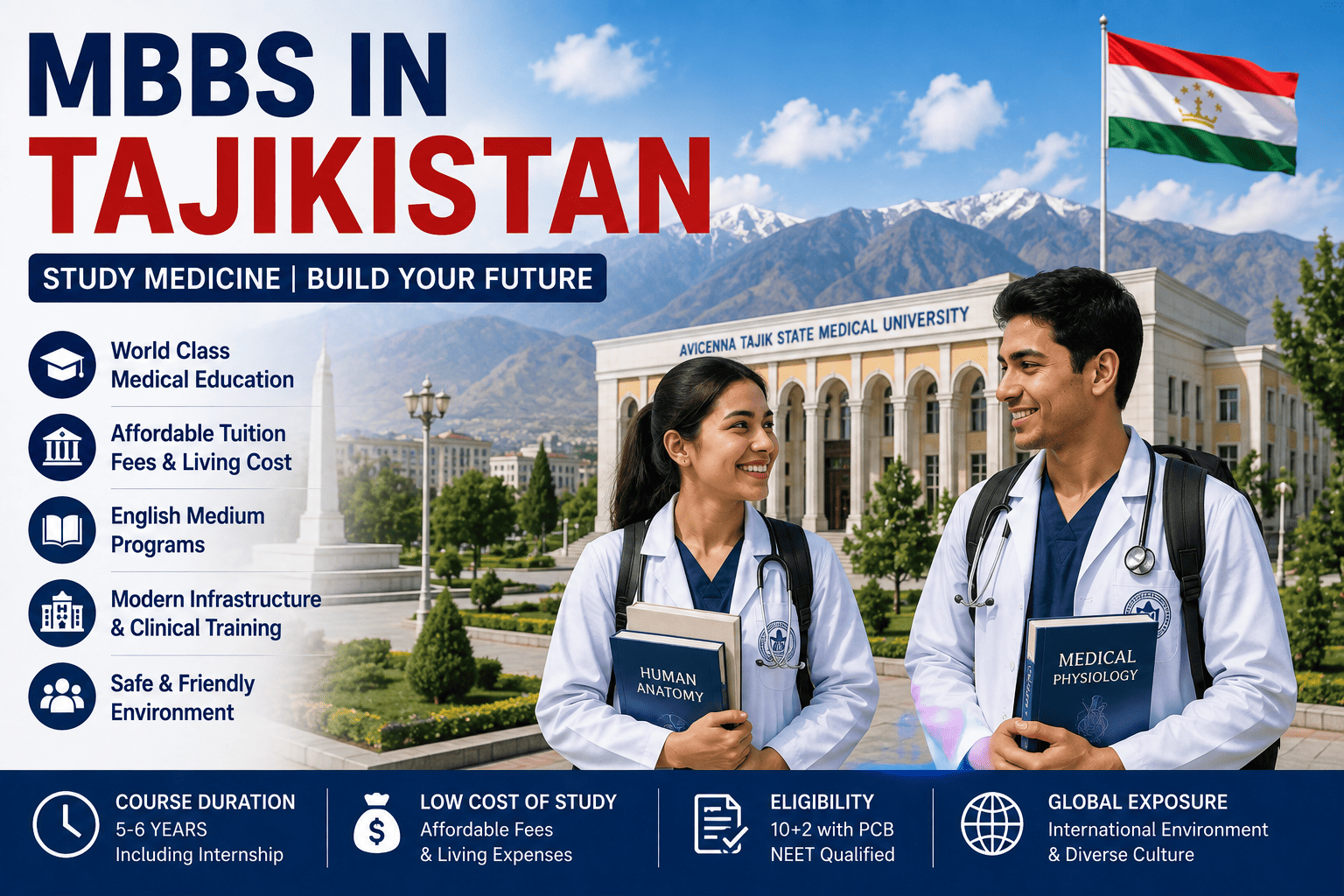
MBBS in Tajikistan 2026-27 | Fees, Universities & Eligibility
Fri Aug 2026
MBBS in Central America 2026-27 | Fees, Universities, Eligibility & Admission MBBS in Central America is an option for Indian...
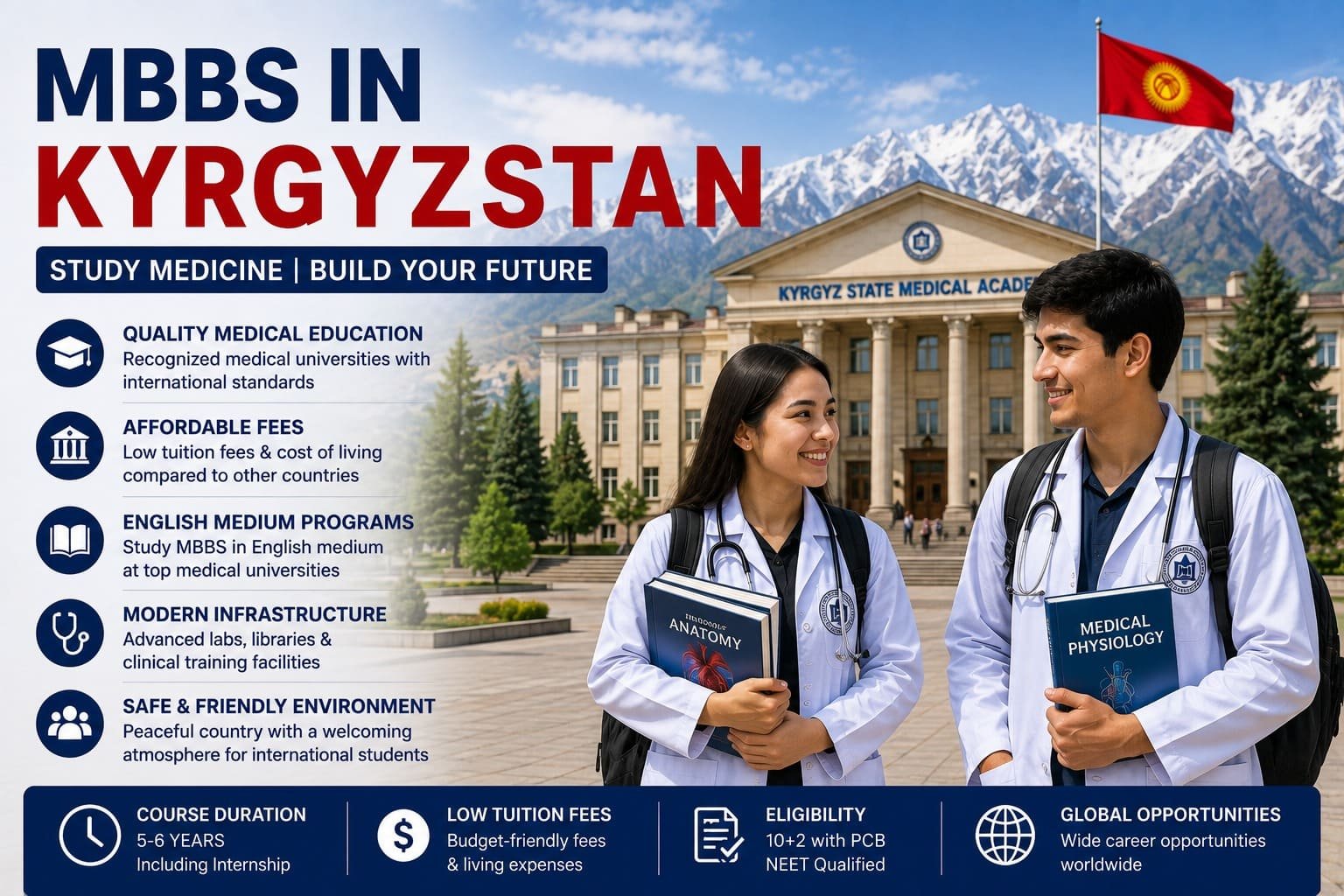
MBBS in Kyrgyzstan
Fri Aug 2026
MBBS in Kyrgyzstan 2026-27 is a popular choice for Indian students seeking affordable medical education abroad. Kyrgyzstan offers English-medium medical...

MBBS in Uzbekistan
Sat Aug 2026
MBBS in Uzbekistan is an affordable option for Indian students seeking quality medical education abroad. Medical universities in Uzbekistan offer...

MBBS In Armenia
Sat Aug 2026
MBBS in Armenia 2026-27 MBBS in Armenia opens fantastic opportunities for medical aspirants worldwide. Choosing Armenia for the MBBS course...

Study MBBS in Belarus
Sat Aug 2026
MBBS in Belarus 2026–27 is an option for Indian students seeking medical education abroad. Belarus offers established medical universities, international...

FMGE 2026 Latest Update: Exam Date, Important Updates & What Aspirants Need to Know
Tue Sep 2026
FMGE 2026 aspirants, stay updated with the latest examination news, important announcements and upcoming FMGE dates. The FMGE December 2026...

NEET Qualified But No Government MBBS Seat? Here’s What You Can Do Next
Tue Sep 2026
Qualifying NEET is a major achievement, but it does not guarantee a government MBBS seat. If you haven't secured one,...